A limb-salvage case in practice: REVITA as part of the treatment of a difficult-to heal wound
25 August 2026
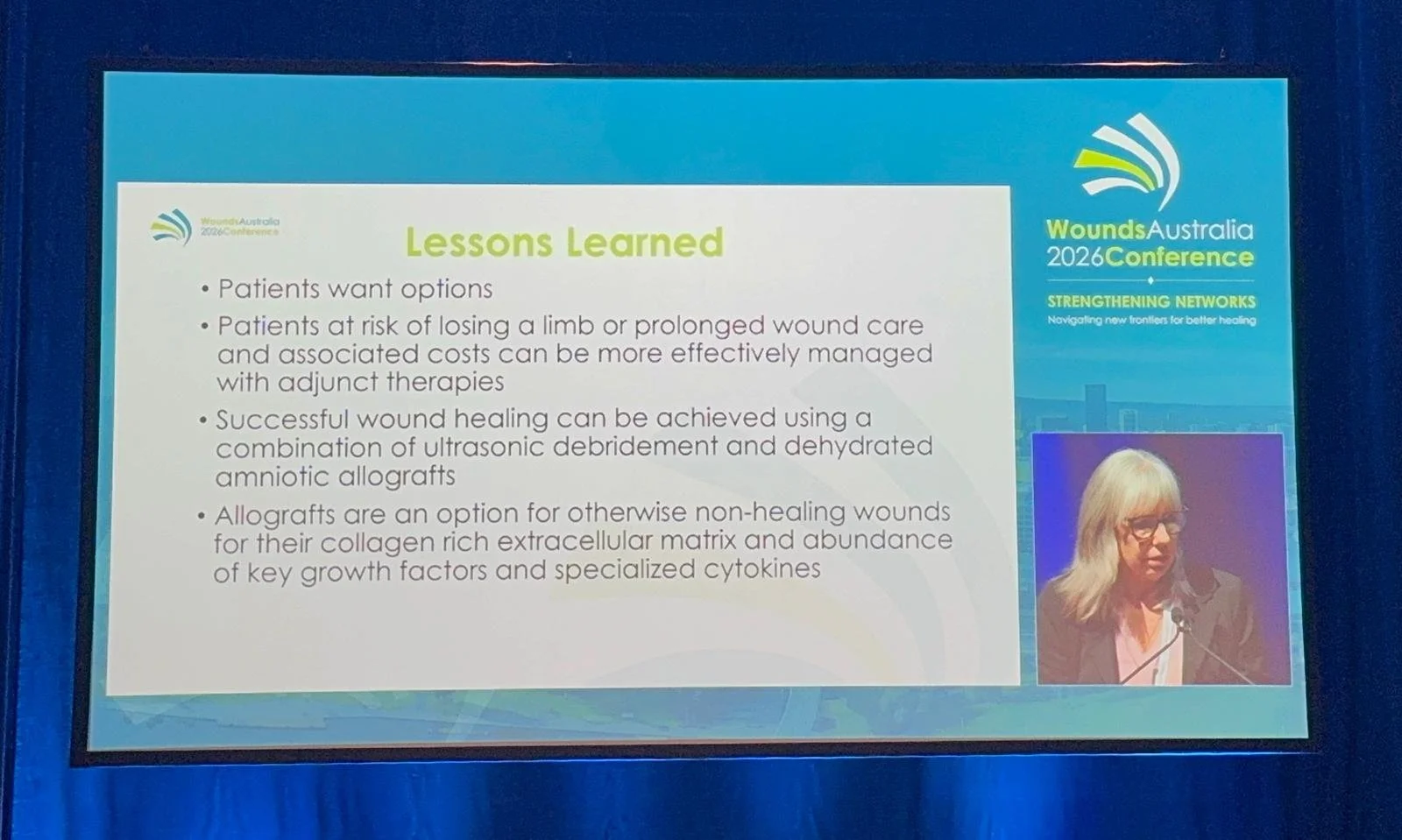
This week, at the Wounds Australia Conference, Dr Alison Vallejo presented two case reports involving difficult-to-heal wounds treated with 𝗥𝗘𝗩𝗜𝗧𝗔 as an adjunct to standard wound care. In both cases, treatment supported wound closure, and in one case it even helped avoid a further limb amputation.
𝗥𝗘𝗩𝗜𝗧𝗔 is an Australian-made placental allograft designed to support the wound-healing environment. It contains more than 800 proteins, including naturally occurring extracellular-matrix and signalling components relevant to tissue repair.
One patient had previously undergone amputation of one leg following a non-healing wound and was understandably determined to avoid amputation of the remaining limb. Under Dr Vallejo’s care, the patient received ultrasound-assisted debridement alongside application of the 𝗥𝗘𝗩𝗜𝗧𝗔 placental allograft, as part of an individualised wound-management plan.
The patient commented:
“The use of an allograft on my wound was an absolute game changer. It led to healing of the wound and took weeks off the process. It was expensive, but the amazing results outweighed the cost.”